
Fire alarms are great, that is as long as they are working properly. Every so often, for some reason or another, fire alarms seem to go on the blink, and keep you awake at all hours of the night. When that happens instead of putting up with the problem, or removing the batteries and having the fire alarm stop work why not try doing some troubleshooting. Troubleshooting fire alarms is particularly easy, as long as you keep in mind five things. Those five items are resetting the alarm, checking the batteries, location, connections, and cleaning.
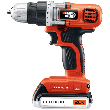
MAX Power! A powerful lithium-ion drill/driver that delivers 0-to-650 RPM and 115 inches-per-pound of torque in a lightweight, easy-to-use package. An anti-slip soft grip and LED worklight makes this tool a delight to use. Check out Black & Decker 20-Volt Cordless Drill/Driver today!
While you can take every precaution to ensure that your home is safe for your children, there is always the chance that ...
Discover MoreAsbestos used to be an extremely popular, though ultimately dangerous home insulating material. Removing asbestos has ...
Discover MoreMost people don't really think about possible carbon monoxide poisoning until it is way too late. Instead of running the ...
Discover More2020-11-15 02:31:05
noel lofranco
hi - i have a problem of fire alarm the brand is Zeta addressable the alarm appear in the screen is STD remove but the devise in in the exact position how re repair that type of alarm
2019-09-28 12:03:21
Hi, I am troubleshooting a residential system. It's a ESL 1500 series. There's only one zone, when zone is disconnected, alarm clears. I went to every smoke detector and bypassed it. The alarm is still present after bypassing each smoke one by one. Horn strobe circuit is not the issue. Anybody have ideas on what the test next.
2016-11-20 21:11:38
Ethel Riffle
We have fire alarms in our bed rooms. When we take showers in master bath the fire a lame goes off. And no reason for it. How can we fix it?
2016-08-15 14:20:40
Nick Mazzocchi
I have a fire trouble now display. The smoke detector closest to the system is properly flashing red every 7-10 seconds. All others are not.
How do I begin to troubleshoot.
Thanks
Nick
2015-07-24 11:34:57
cherub
the info is understood.
2014-09-07 03:24:46
Balamurugan
Hello Sir,
I am working in Ministry of Health,Saudi Arabia. We are using Esser by Honeywell Fire Alarm control panel (Model.IQ8 Control M). In this panel installed before 2 years but now we are facing too much problems in this panel Loop cards and also network cards. the exact problem is when the Fire alert comes from any loop devices it will make hang for hole panel functions. Can you please suggest me how to fix this trouble??
2014-04-15 08:28:31
melvin
hi sir. i have a problem regarding my siemens fc10 alarm panel because it indicated an ALARM HORN FAULT. how to fix this sir? and whats the cause?
Copyright © 2026 Sharon Parq Associates, Inc.
Comments